What happens when you put a drop of dish soap into a bowl of milk with food coloring?
Choose the best answer ↓
Hint: It has to do with fat molecules and surface tension
Start simple.
Go deeper.
Cards grow more complex as you scroll. Tap any card to flip it and see the full walkthrough, materials, and the science behind it.
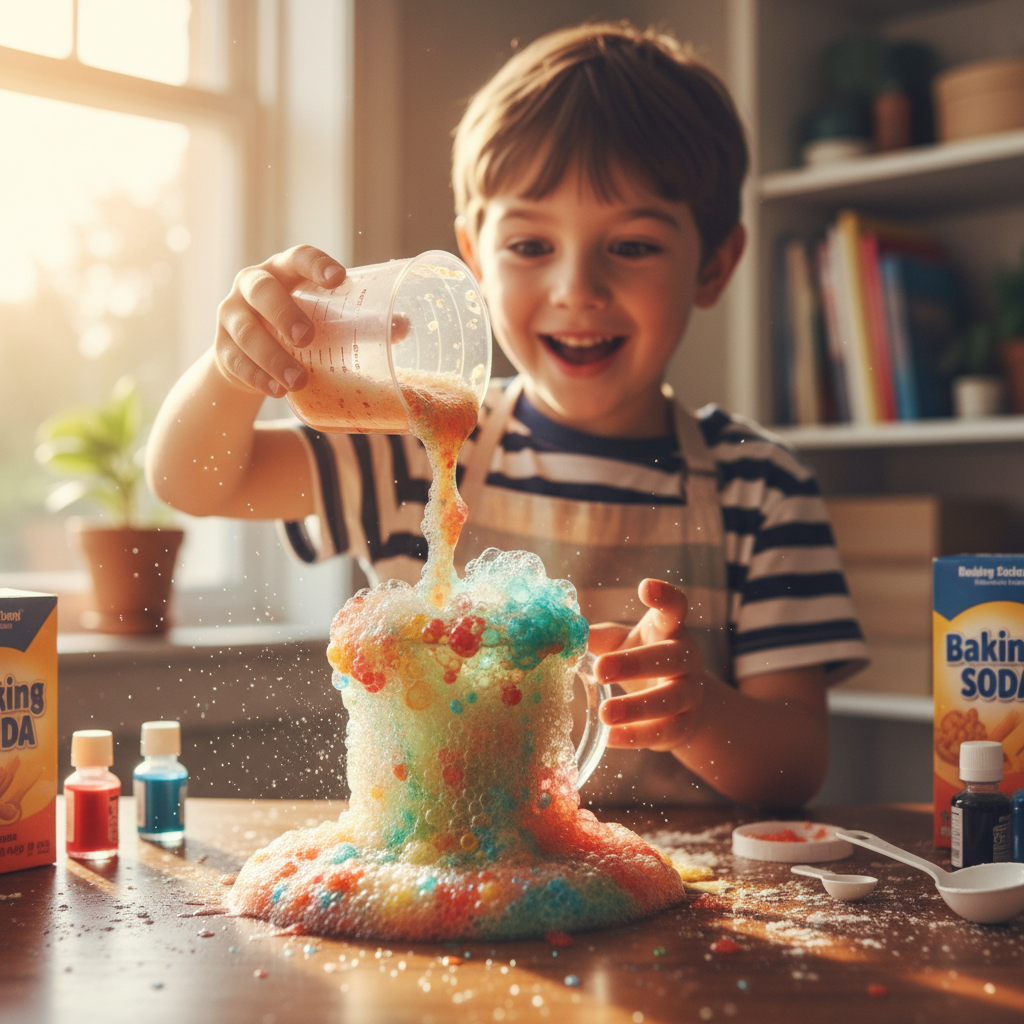
Kitchen Volcano
The classic that started it all — now with real chemistry behind it.
Gather
Mix
Discover
Full Walkthrough
Kitchen Volcano
Gather
Baking soda (1 tbsp), white vinegar (½ cup), dish soap (a squeeze), red food coloring.
Mix
Pile the baking soda in a small cup. Add food coloring and soap on top. Pour vinegar over it all at once.
Discover
Watch carbon dioxide gas form and push the foam upward. The soap traps the bubbles, making the eruption last longer.
You'll Need
🔬 The Science
Vinegar (acetic acid) reacts with baking soda (sodium bicarbonate) to form CO₂ gas. The soap traps the gas in bubbles, creating that satisfying foam eruption.
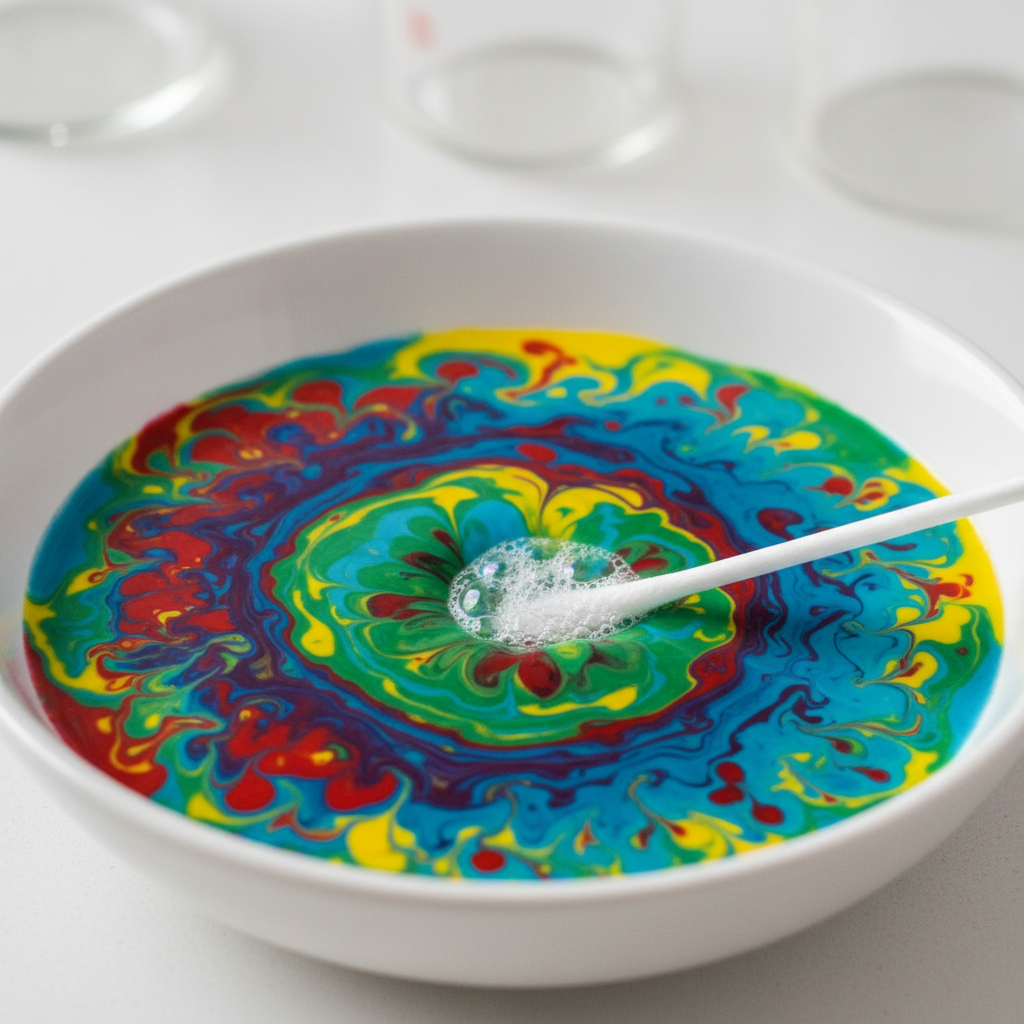
Milk Canvas
One drop of soap and the fat molecules flee — dragging color with them.
Gather
Mix
Discover
Full Walkthrough
Milk Canvas
Gather
Whole milk, 3–4 food coloring drops (different colors), dish soap, a shallow bowl, a cotton swab.
Mix
Pour milk into the bowl. Add drops of food coloring around the bowl. Dip the cotton swab in dish soap, then touch the center of the milk.
Discover
The colors explode outward in swirling patterns, then keep moving for several seconds.
You'll Need
🔬 The Science
Dish soap has a water-loving end and a fat-loving end. It races to attach to the fat molecules in milk, pushing them away — and the food coloring rides along for the journey.
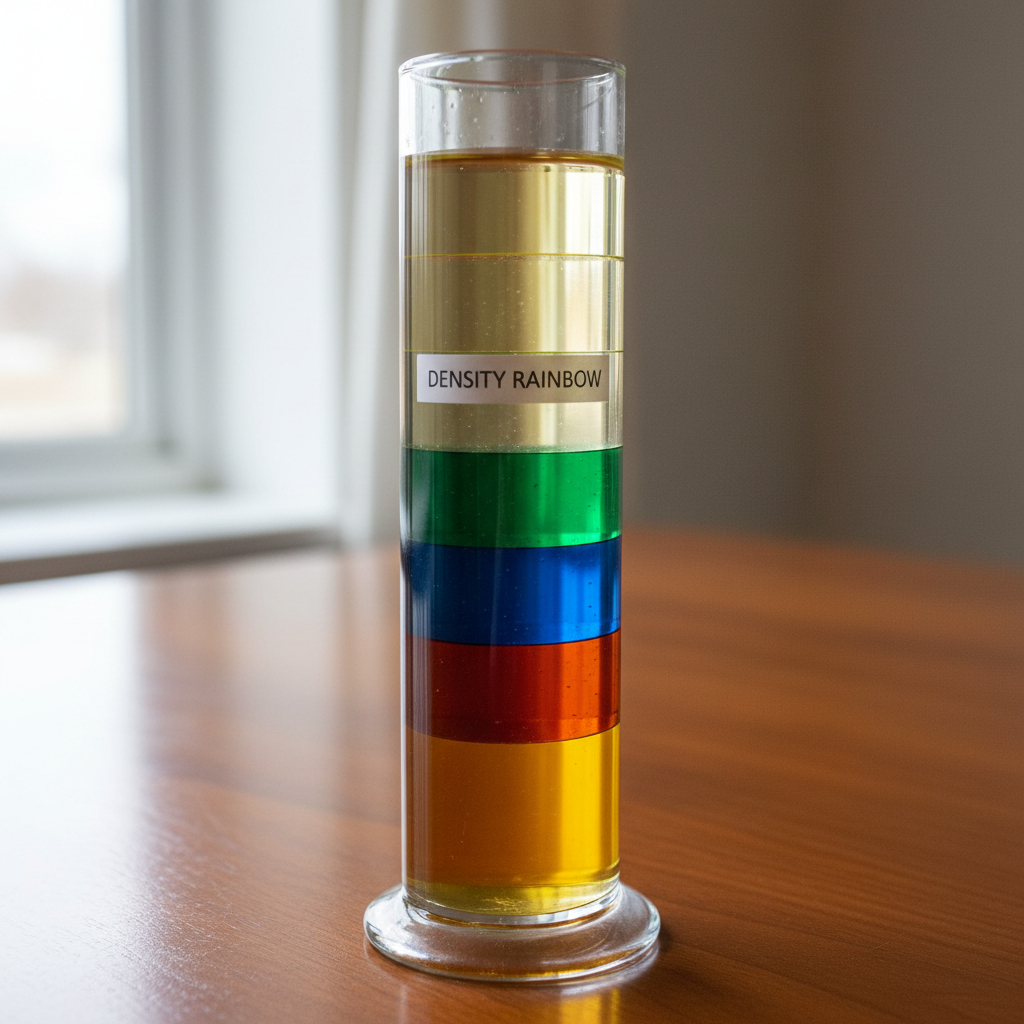
Rainbow Density Jar
Seven liquids, one jar, zero mixing. Gravity does the sorting.
Gather
Mix
Discover
Full Walkthrough
Rainbow Density Jar
Gather
Honey, corn syrup, dish soap, water (with blue dye), vegetable oil, rubbing alcohol (with red dye), a tall clear jar.
Mix
Pour each liquid very slowly down the side of the jar in order: honey first, then corn syrup, soap, water, oil, alcohol last.
Discover
Each liquid floats on the one below it, forming distinct colored bands. Try dropping small objects — they stop at their matching density layer.
You'll Need
🔬 The Science
Liquids with more mass per unit of volume sink below lighter ones. Honey is about 1.4 g/mL; rubbing alcohol is only 0.79 g/mL — they refuse to mix because of this density difference.
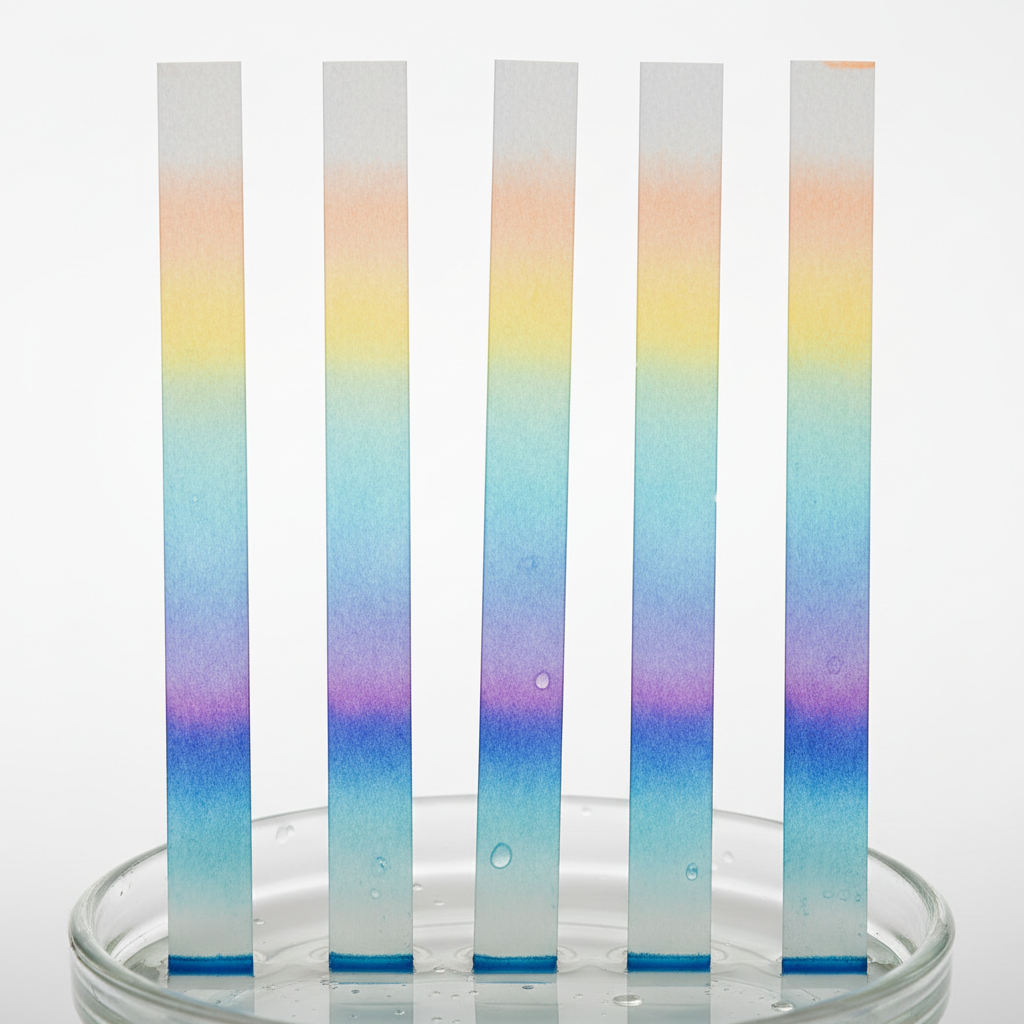
Hidden Colors
Black ink is never just black. Unpack its secret rainbow.
Gather
Mix
Discover
Full Walkthrough
Hidden Colors
Gather
Coffee filters, black washable markers (not permanent), water, a glass, scissors, tape.
Mix
Cut the filter into strips. Draw a thick line with black marker about 1cm from the bottom. Hang the strip so only the very bottom touches water.
Discover
Watch the water climb the paper. As it passes through the marker line, it separates the ink into its component colors: often blues, purples, and oranges.
You'll Need
🔬 The Science
Different dye molecules in the ink travel at different speeds through the paper fiber. Smaller molecules move faster and separate from heavier ones — revealing the hidden colors inside "black."
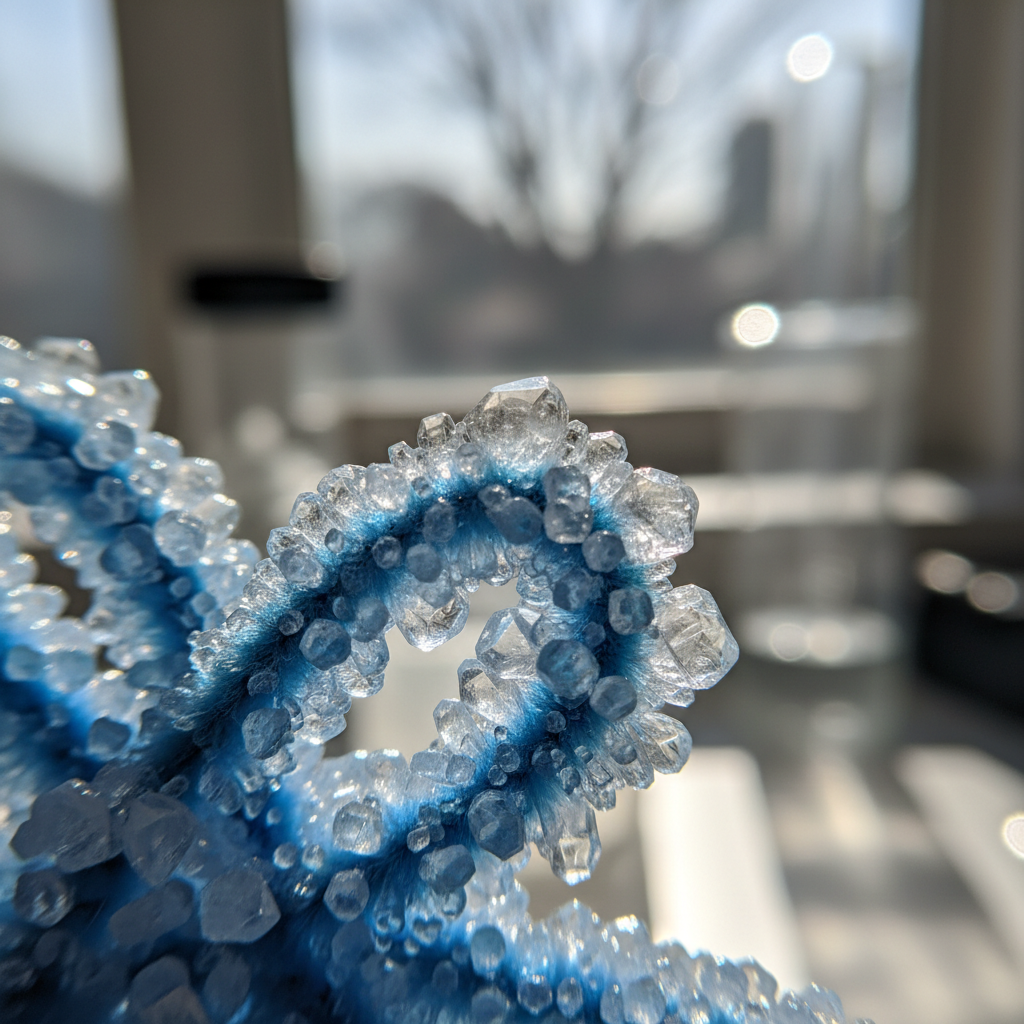
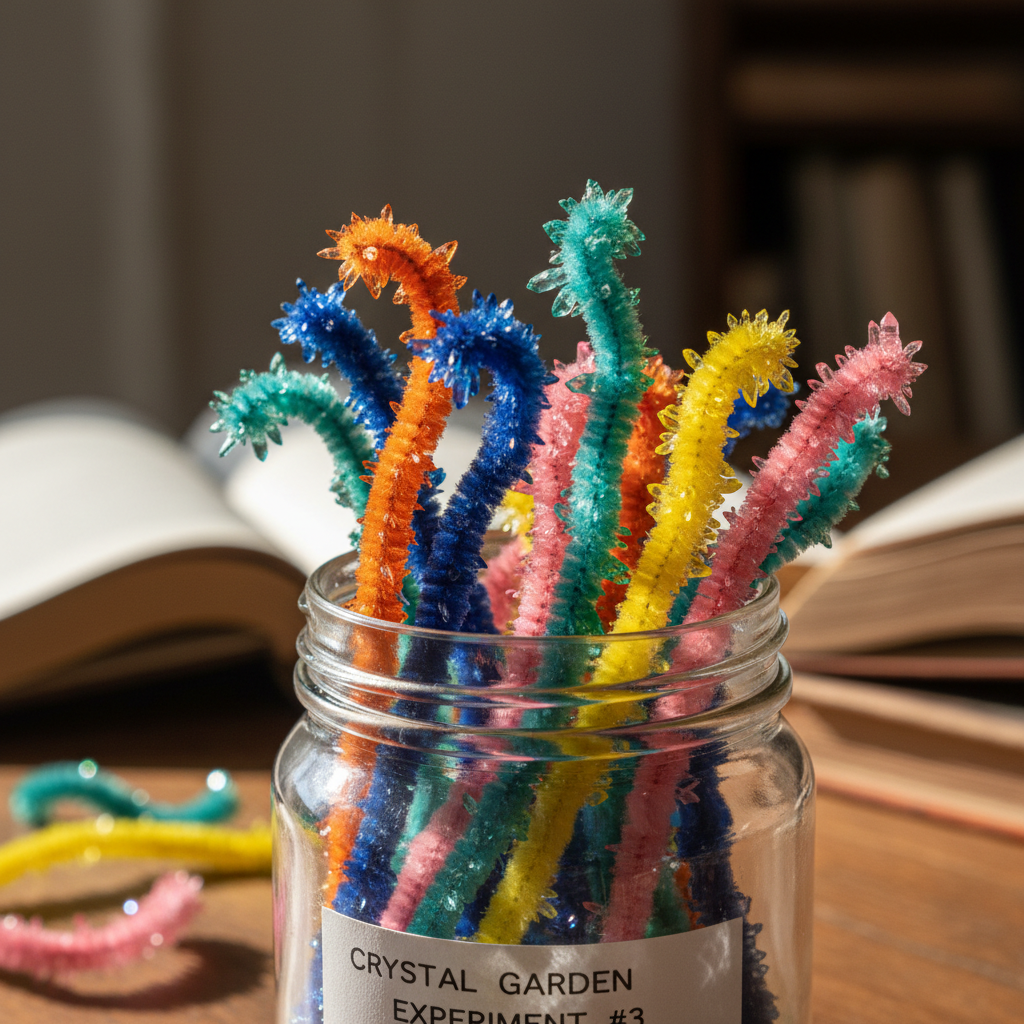
Grow Your Own Crystals
Overnight patience, permanent wonder. Real crystal lattice formation.
Gather
Mix
Discover
Full Walkthrough
Grow Your Own Crystals
Gather
Borax powder (laundry section), boiling water, pipe cleaners, string, pencil, glass jar, food coloring.
Mix
Twist pipe cleaner into a shape. Dissolve 3 tbsp borax per 1 cup boiling water — stir until fully clear. Add food coloring. Submerge the pipe cleaner shape, suspended by string from the pencil across the jar top.
Discover
Leave overnight without disturbing. By morning, the pipe cleaner will be covered in geometric crystal formations.
You'll Need
🔬 The Science
Hot water holds more dissolved borax than cool water. As the solution cools overnight, the extra borax molecules have nowhere to go — so they stack themselves in precise geometric patterns called crystal lattices.
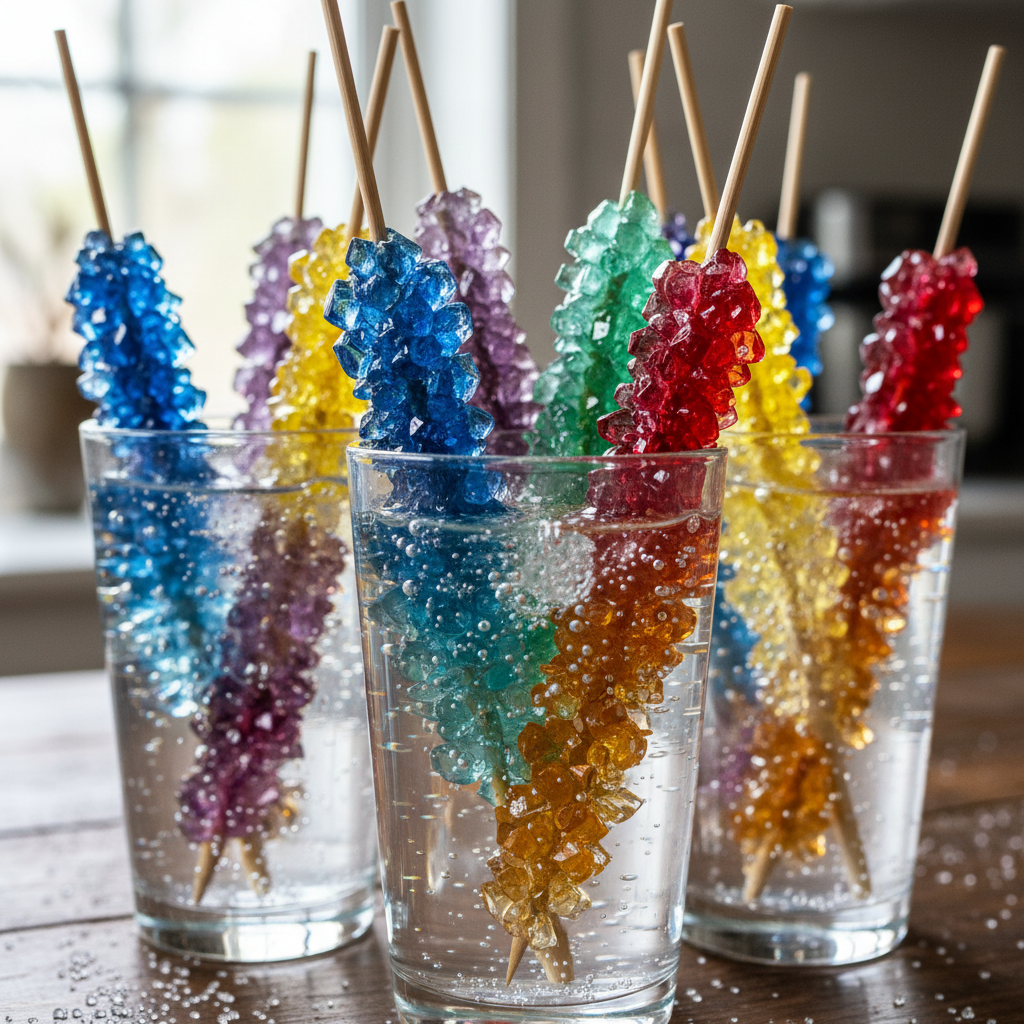
Edible Rock Candy
Sugar crystals you can eat. Crystallization never tasted this good.
Gather
Mix
Discover
Full Walkthrough
Edible Rock Candy
Gather
Granulated sugar (3 cups), water (1 cup), wooden skewers, clothespins, tall glasses, food coloring, flavoring extract.
Mix
Dissolve sugar in boiling water to make a supersaturated solution. Add coloring and flavor. Dip skewers in solution, roll in sugar, let dry. Submerge skewers in solution, balanced on clothespins across the glass top.
Discover
Check daily. Over 5–7 days, sugar crystals build up on the skewer. The longer you wait, the bigger the crystals grow.
You'll Need
🔬 The Science
A supersaturated solution holds more sugar than it normally can at room temperature. As it cools and evaporates, the extra sugar molecules find the seed crystals on the skewer and stack themselves in orderly rows.
No sign-up needed
Browse the full archive
52 experiments, free to preview. See what your child will discover before you commit to anything.
Considered at every step
Three words, always in the same order. Gather. Mix. Discover.
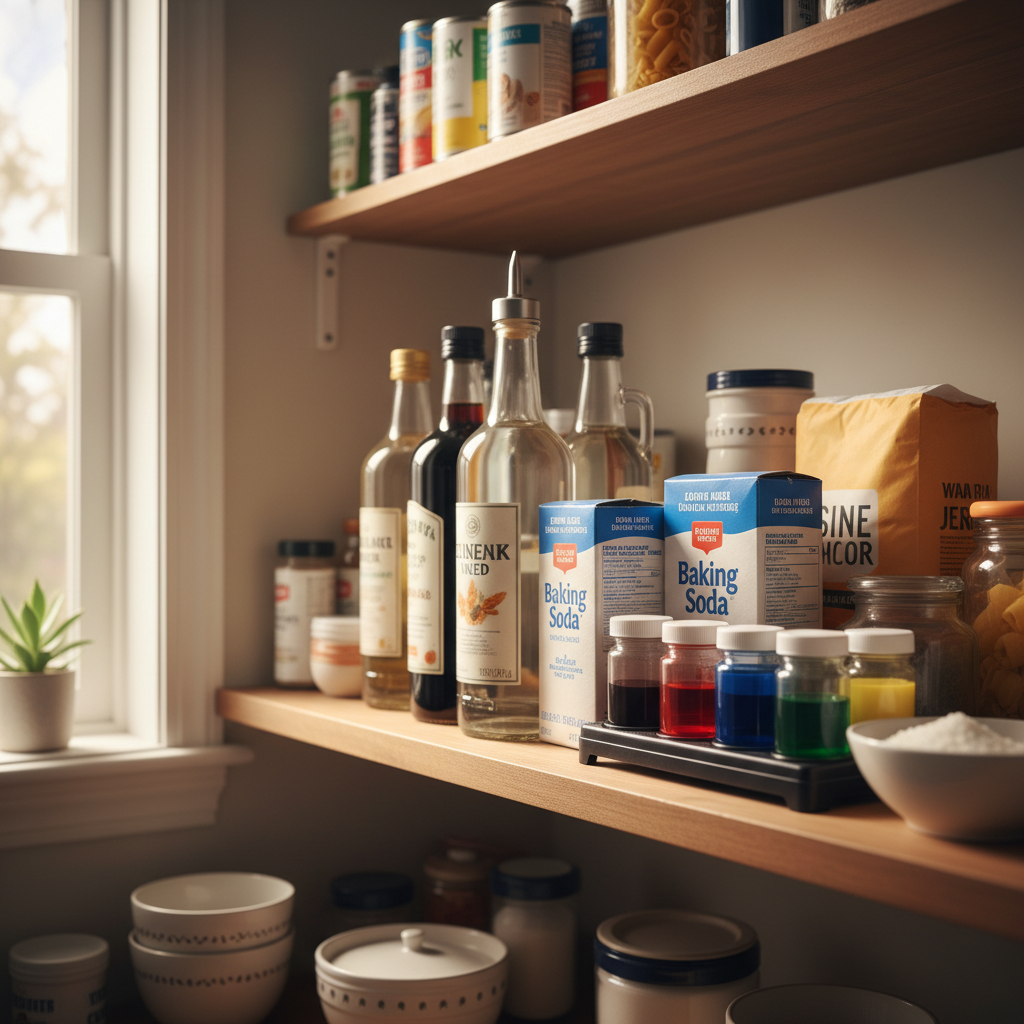
Step 01
Gather
Everything from your pantry
Each experiment uses ingredients already in your kitchen — baking soda, vinegar, food coloring, dish soap. No specialty store runs required.
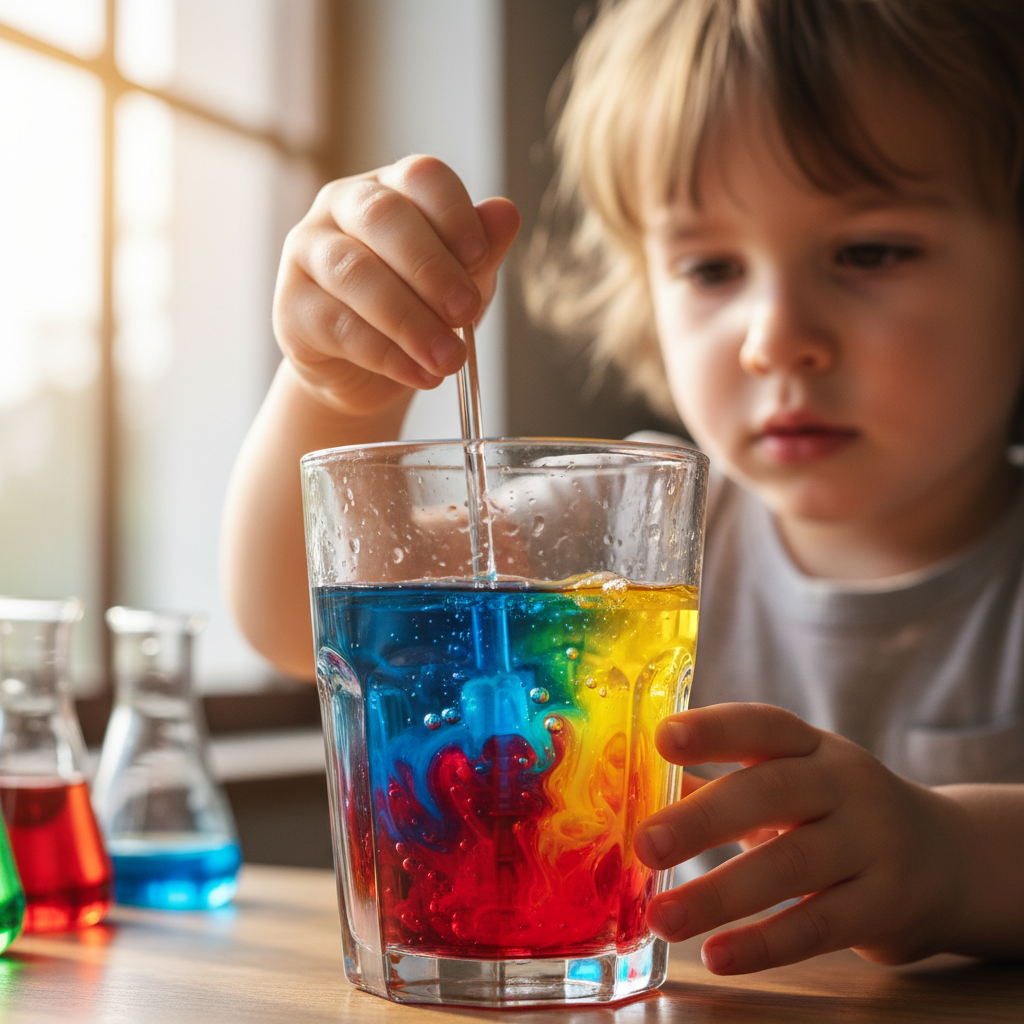
Step 02
Mix
Follow the illustrated guide
Each card shows exactly three steps with hand-drawn illustrations. If a seven-year-old can follow it independently, it passes our test.
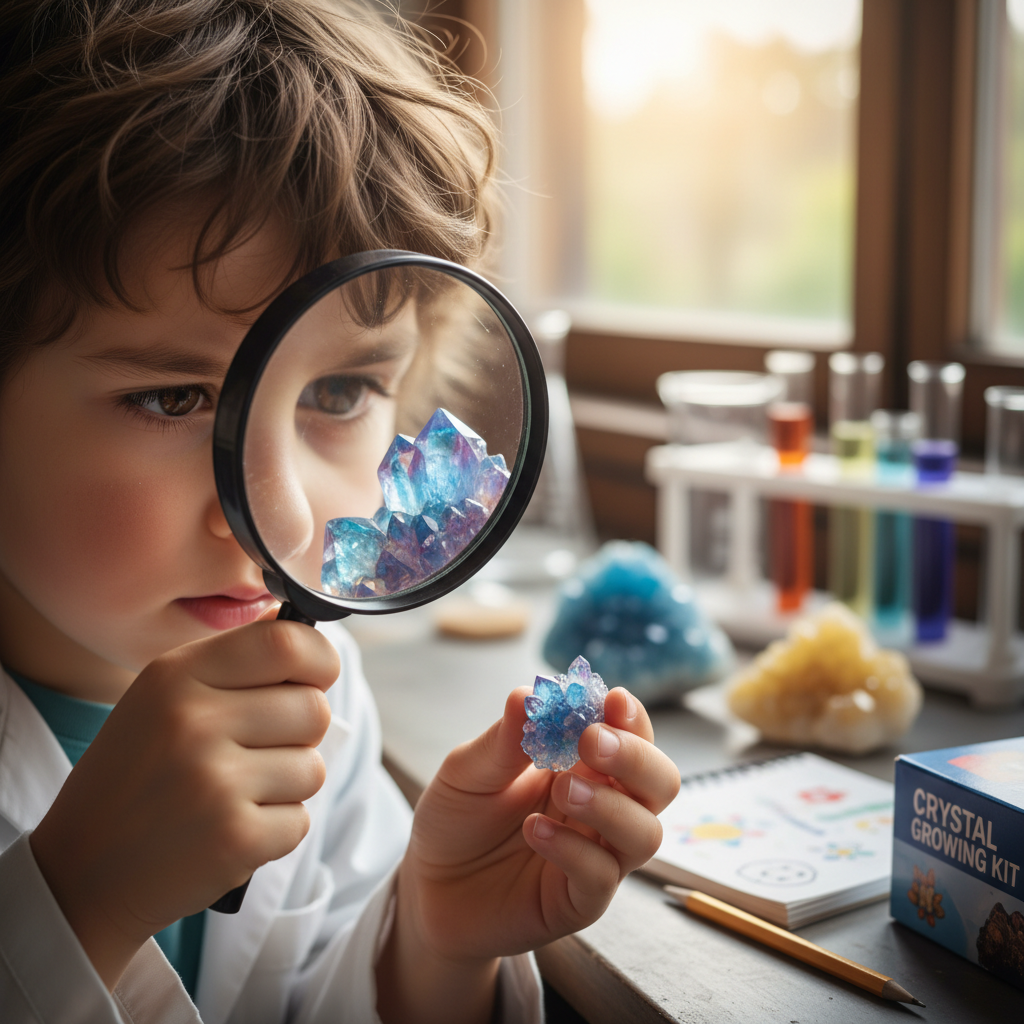
Step 03
Discover
Learn the real chemistry
Every experiment flips over to reveal the science concept underneath — surface tension, acid-base reactions, crystallization. Real vocabulary, explained simply.
The Beaker
Standard
We believe that how you learn chemistry shapes whether you love it. Every experiment earns its place by answering one question: does a seven-year-old ask “why?” when it's over?
Homeschool-Ready
Each experiment maps to a real science concept with vocabulary, so it counts as curriculum — not just craft time.
45 Minutes, Start to Finish
Designed for after-school programs and attention spans that wander. Set up, run, clean up — all in one session.
Pantry Ingredients Only
No specialty chemicals. No safety goggles required. Everything in the free experiments lives in your kitchen right now.
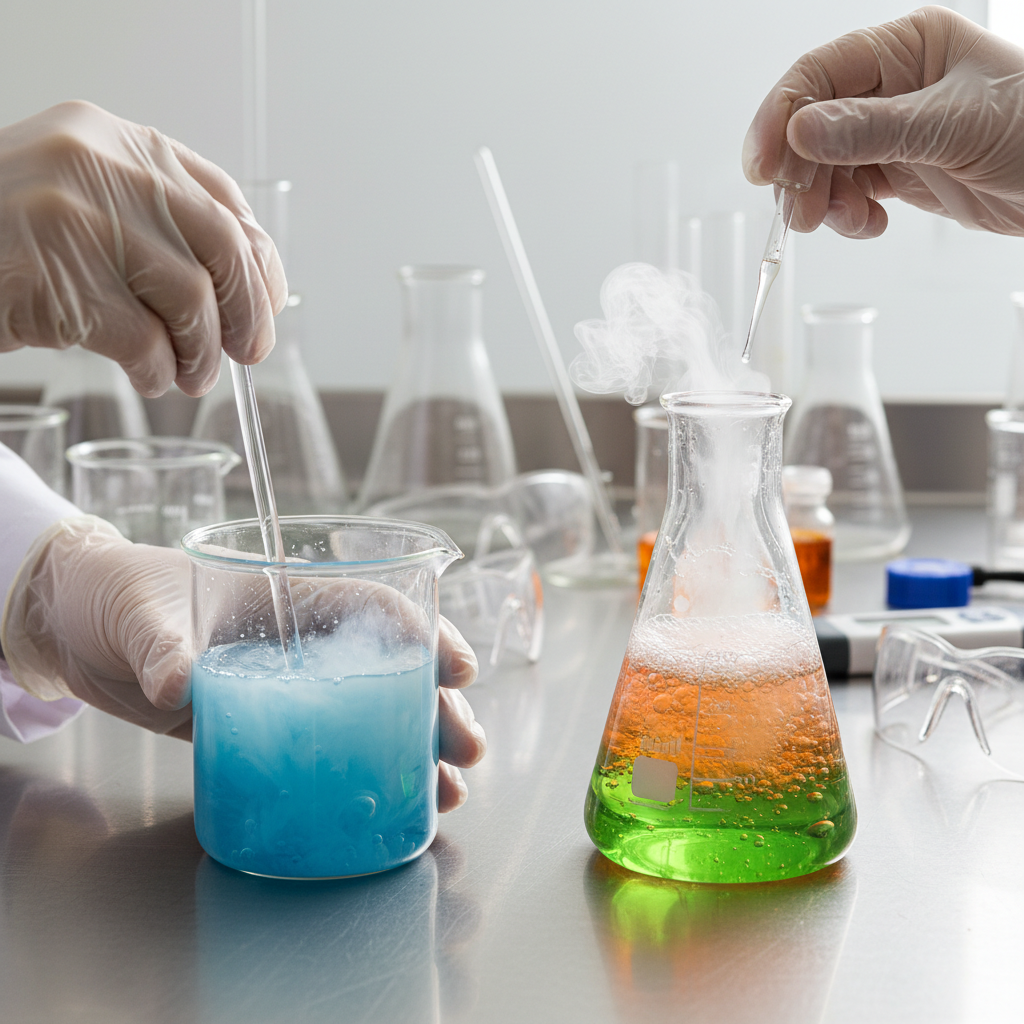
Real Chemistry, Simple Language
We don't say "it's magic." We say "surface tension" and "acid-base reaction" — then explain what those words mean.
What families are saying
“My daughter finished the crystal experiment and immediately asked if she could do it again with different colors. That's never happened with any worksheet.
Sarah M., homeschool parent
Grew crystals with her 8-year-old, Nora
Portland, OR
“I run an after-school program for 24 kids. The density tower was the first experiment where every single child was still at the table when it was done.
Marcus T., program coordinator
Grades 3–5, Lincoln Elementary
Austin, TX
“My son already knew baking soda plus vinegar makes bubbles. Beaker explained why — carbon dioxide, acid-base reactions. He used those words at dinner that night.
Priya K., homeschool parent
Building curriculum for her 10-year-old, Arjun
Fremont, CA
“The illustrated cards are the secret. My seven-year-old set up the chromatography experiment entirely by herself while I made coffee. Zero help needed.
Jennifer O., parent
Homeschooling two kids, ages 7 and 9
Nashville, TN
“We've tried three other science kits. This is the only one that felt like it was designed by someone who actually spent time watching kids do experiments.
David & Rachel P., parents
Three kids, ages 5, 8, and 11
Bozeman, MT
Download this week's
free experiment
This week: Grow Your Own Crystals — the full illustrated walkthrough, materials list, and the science explanation, all in one printable card.
Not ready to sign up?
Browse all 52 experiments without signing up →